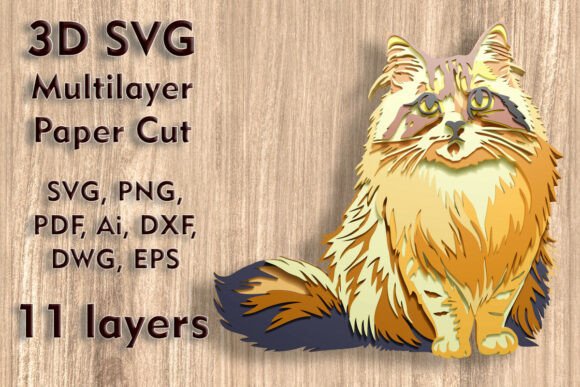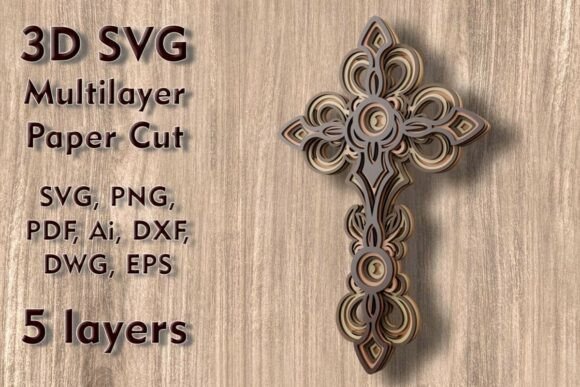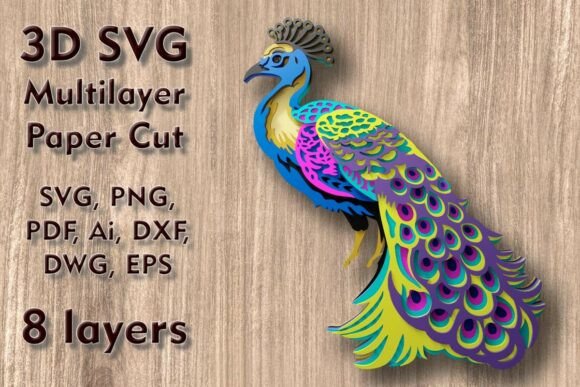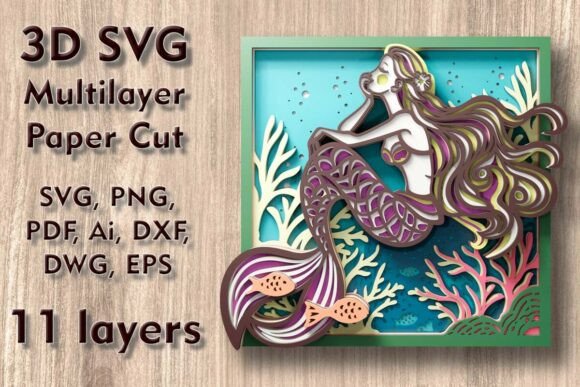
Eagle 3D SVG Multilayer PaperCut Files
First Impressions: Bold, Layered, and Ready for Dimension
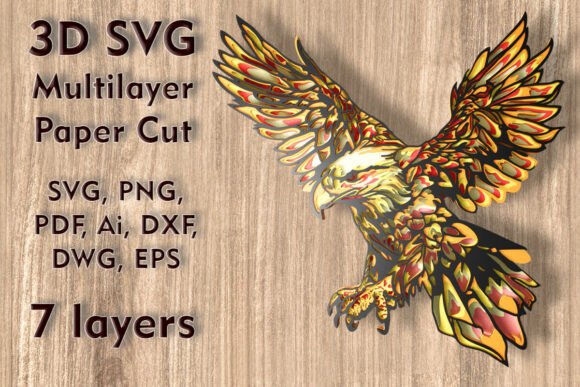
Opening Eagle 3D SVG Multilayer PaperСut Files, I immediately felt the weight of intention—not just decoration, but storytelling in layers. This isn’t a flat emblem; it’s a sculptural silhouette built for depth: wings stacked with subtle offset, beak and talons carved into distinct planes, feathers suggested through strategic negative space rather than dense fill. At 300 x 300 mm (11.8 x 11.8 in), it commands presence—ideal for statement pieces like oversized pillow covers, nursery wall hangings, or boutique aprons. The eagle motif carries gravitas without stiffness; it feels both timeless and hand-crafted, which is rare in digital embroidery files. As a designer who’s seen hundreds of eagle motifs, this one avoids cliché by leaning into paper-cut rhythm—clean lines, intentional gaps, and a sense of air moving *between* layers.
Real-World Test: Stitching It on a Linen-Cotton Tote Bag
Last week, I prepped Eagle 3D SVG Multilayer PaperСut Files for a custom embroidered tote bag—linen-cotton blend, medium weight, natural off-white. My goal? A refined, gallery-worthy piece for a local artisan market stall. I resized the design to 220 mm wide to fit comfortably within my 250 mm hoop, keeping proportions intact. What stood out during digitizing was how naturally the multilayer structure translated to stitch logic: outer wings became satin-stitched contours, inner body used controlled fill stitch with moderate density, and fine feather edges relied on precise running stitch outlines. No jagged transitions. No over-stuffed zones. On fabric, the result had elegant contrast—crisp definition where layers met, soft shadowing where elements overlapped. Customers paused mid-aisle. That’s not just visual interest—it’s emotional resonance.
Where It Shines (and Where to Pause)
Eagle 3D SVG Multilayer PaperСut Files excels in projects that benefit from narrative texture:
- Custom apparel: Sweatshirt backs, denim jacket yokes, or unisex crewnecks—especially when paired with tonal thread (charcoal grey on heather grey, navy on indigo).
- Baby and nursery items: Swaddle blankets, crib bumpers, or wooden mobile backings—its strong silhouette reads clearly at small viewing distances.
- Holiday and wedding gifts: Embroidered tea towels for housewarmings, linen pillow covers for newlyweds, or framed shadow-box patches as keepsakes.
- Boutique branding: As a signature motif on aprons, shop tags, or limited-run tote collections—adds craft credibility without looking mass-produced.
But caution is needed where dimension fights function:
- Avoid stretching it onto curved surfaces like caps unless you reduce size significantly and reinforce stabilizer—thin wingtips may distort.
- On stretchy knits (e.g., baby onesies), use cutaway + tear-away combo stabilizer and test tension first—the layered layout amplifies skipped stitches if fabric shifts.
- Don’t shrink below ~150 mm without checking detail integrity: those delicate feather tips and layered beak edges rely on minimum line thickness. The product note—“be careful in reducing the design, consider thin elements”—is spot-on.
- Dark fabrics demand high-contrast thread choices. A black eagle on charcoal won’t read; go for metallic gold, cream, or deep burgundy instead.
What It Does for Your Craft Business
For Etsy sellers and small shop owners, Eagle 3D SVG Multilayer PaperСut Files isn’t just another embroidery file—it’s a value amplifier. Its layered aesthetic signals craftsmanship before the first stitch. Customers associate that depth with care, time, and intentionality—critical for premium pricing. When used on personalized gifts (e.g., “Eagle Ridge Family” embroidered on a kitchen towel), it elevates perceived quality far beyond standard monograms. It also performs well in printable mockups: the clean SVG vector base lets you preview confidently on light/dark backgrounds, and its balanced negative space prevents visual clutter in digital listings. Just remember—if you’re selling finished products using this design, confirm licensing terms. As an Other category file labeled 3D SVG, its commercial use scope isn’t stated outright, so verify before scaling production.
Practical Designer Notes You’ll Actually Use
Before stitching Eagle 3D SVG Multilayer PaperСut Files into your next project, do these five things:
- Test on scrap fabric—same type and color as your final piece—to assess stitch density, thread pull, and stabilizer hold.
- Check thread color contrast in natural light *and* under store lighting. What reads bold on screen may mute on textured linen.
- Review stitch density in layered zones. Overly dense fills in overlapping areas can cause puckering—adjust if needed.
- Confirm hoop size compatibility. While scalable up, ensure your machine’s largest hoop comfortably contains the full design at your chosen size.
- Inspect tiny details in your embroidery software: feather tips, eye contour, wing joint lines. If they appear fragile at 100%, simplify or reinforce manually.
Also: run a black-and-white mockup to verify readability, compare light vs. dark fabric renders, and always use appropriate stabilizer—medium-weight cutaway for stable wovens, hybrid for knits. And yes—double-check whether this machine embroidery design permits commercial resale of finished items or digital embroidery files. Clarity here protects your craft business long term.
Final Thought: Not Just an Eagle—A Design Decision
Eagle 3D SVG Multilayer PaperСut Files works because it respects the materiality of embroidery. It doesn’t fight thread or fabric—it invites them in. Whether you’re building a cohesive line of handmade product, launching a new collection of personalized gift sets, or sourcing reliable design assets for client work, this file delivers quiet authority. It’s not flashy. It’s focused. And in a market saturated with generic motifs, that focus is your strongest differentiator.