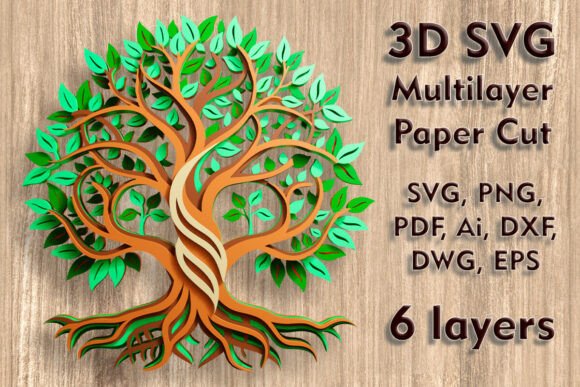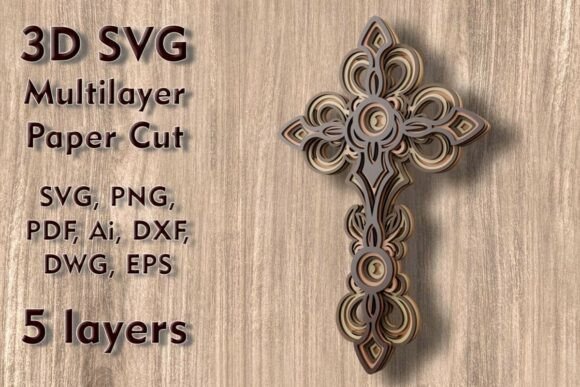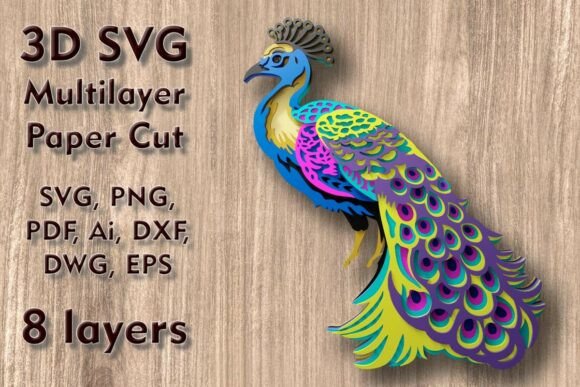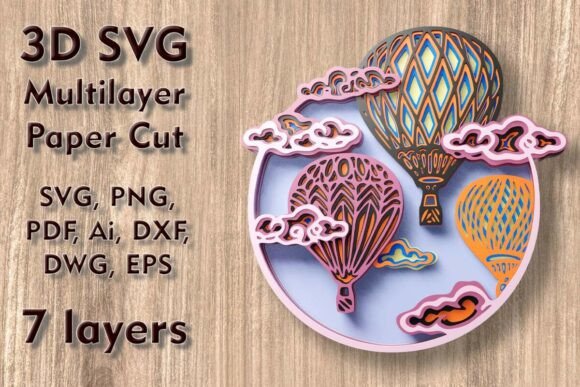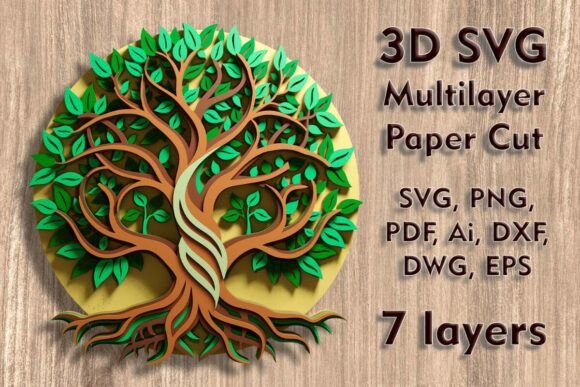
Tree of Life 3D SVG Multilayer Cut Files
A Designer’s First Glance: Grace, Depth, and Quiet Confidence
When I opened Tree of Life 3D SVG Multilayer Cut Files, what struck me wasn’t just the shape—but the *weight* of it. Not physical weight, but visual gravity: layered branches that breathe, roots that anchor without heaviness, and a silhouette that feels both ancient and approachable. At 250 x 245 mm (9.9 x 9.7 in), it’s sized for impact—not clutter. This isn’t a dainty accent; it’s a statement piece meant to hold space on a sweatshirt chest, a nursery wall hanging, or the center of a linen tea towel. As an embroidery designer who’s stitched hundreds of nature motifs, I appreciate how this design avoids overcomplication. No fussy leaves, no tangled vines—just clean line work with intentional negative space that translates beautifully into stitch.
How It Lives in Real Embroidery Projects
Last week, I prepped a custom order: an organic cotton tote bag for a holistic wellness studio. They wanted something meaningful but not literal—no words, no clichés. Tree of Life 3D SVG Multilayer Cut Files landed perfectly. I resized it to fit a 120 mm hoop, digitized it as a fill-and-satin combo (keeping root detail crisp with a running stitch outline), and stitched it on medium-weight canvas. The result? A tactile, dimensional effect—almost like subtle bas-relief—that customers paused to touch. That’s the quiet strength of this design: it reads clearly at arm’s length *and* rewards closer inspection.
I’ve also tested it on baby onesies (using ultra-soft stabilizer and low-density fill), aprons for a local bakery (where the scale and symmetry balanced their rustic branding), and as a standalone embroidered patch for a boutique’s gift set. In every case, the multilayer structure gave natural depth—no need for excessive underlay or shadow stitching. It’s especially effective on light-to-mid fabrics where thread sheen can lift the canopy and roots distinctly. On dark fabric? Stick with high-contrast thread—ivory on charcoal, moss green on navy—and keep satin edges tight. It doesn’t shout; it invites.
Where to Proceed With Intention
This isn’t a one-size-fits-all embroidery file. Its elegance comes with practical boundaries. Reducing it below ~80 mm risks losing definition in the inner branch junctions and root tips—details that give the design its grounded, living feel. If you’re stitching on thin jersey or stretchy knits, add cutaway stabilizer *beneath* and lightweight tear-away *on top* to prevent puckering around those fine outer limbs. Curved surfaces—like structured caps—require careful hooping and possibly splitting the design into two sections for smoother registration.
On textured fabrics (burlap, heavy linen, or looped terry), test first: dense fill areas may flatten or blur the layering illusion. And while it works beautifully as a machine embroidery design for apparel and home goods, avoid using it *as-is* for tiny lettering or micro-details—it’s not built for sub-10 mm applications. Think of it as a centerpiece, not a border motif.
What It Adds to Your Handmade Product—and Your Reputation
Customers don’t just buy a Tree of Life—they buy symbolism, care, and intention. When you use Tree of Life 3D SVG Multilayer Cut Files thoughtfully, it elevates your finished product from “hand-stitched” to “hand-chosen with meaning.” I’ve seen Etsy sellers bundle it with matching printable gift tags and care cards—and watch conversion rates rise. Why? Because the design carries inherent trust: it’s balanced, legible, and emotionally resonant without being trendy or dated.
For craft businesses and small shop owners, this is more than an ornament—it’s a versatile design asset. Use it across categories: holiday embroidery (think velvet pillow covers for winter gifting), wedding gifts (embroidered on linen napkins or guestbook sleeves), or even as part of a digital embroidery file collection for fellow designers. Its clean vector foundation makes it easy to adapt for printable mockups or branding elements—just remember to confirm licensing before reselling the digital file itself.
Practical Notes Every Embroidery Designer Should Keep Handy
- Always test first: Stitch on scrap fabric matching your final project’s weight, weave, and color.
- Check thread colors early: Try three combos—neutral (cream + charcoal), earthy (olive + terracotta), and soft (lavender + oat)—before committing.
- Review stitch density: Dense fills look rich on stable fabrics but can stiffen delicate items—adjust if needed for baby embroidery or lightweight totes.
- Confirm hoop size compatibility: The original 250 x 245 mm layout fits standard 10" hoops, but resizing changes tension dynamics—recheck alignment after scaling.
- Inspect corners and joins: Zoom in digitally before stitching—ensure no overlapping nodes or stray vectors that could cause jump stitches.
- Mock it in black and white: A grayscale preview reveals contrast issues faster than color does—especially for custom apparel.
- Stabilizer matters: Medium cutaway for knits, lightweight tear-away for stable wovens, and fusible + tear-away for sheer or slippery fabrics.
- Licensing check: Verify whether the file permits commercial embroidery use, resale of finished products, or redistribution as part of a digital bundle.
Final Thought: A Design That Grows With You
Tree of Life 3D SVG Multilayer Cut Files isn’t flashy—but it’s reliable, expressive, and quietly sophisticated. It works for the hobbyist stitching their first nursery decor piece, the Etsy seller building a cohesive seasonal collection, and the boutique owner sourcing limited-run embroidered gifts. It doesn’t demand attention—it earns it. And in a market crowded with quick trends, that kind of enduring presence is rare. Use it well, test it honestly, and let its layers reflect the care you put into every stitch.