Food Restaurant Business Card Template: Graphics & Print Templates
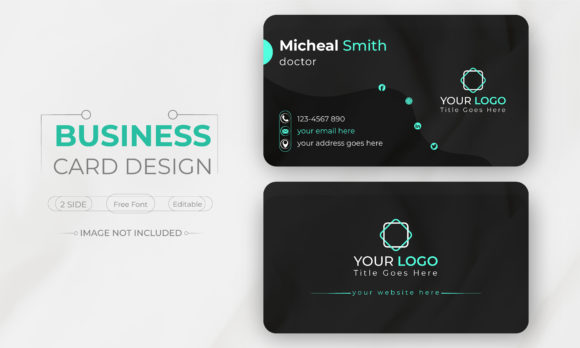
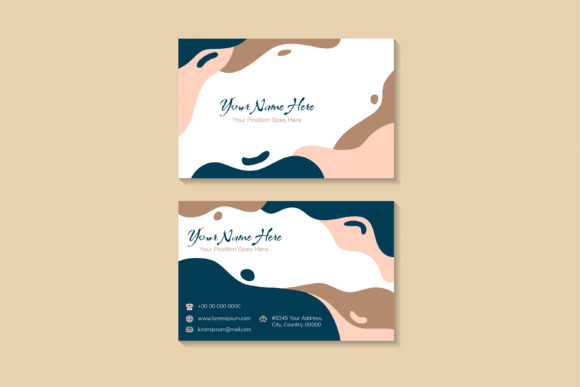
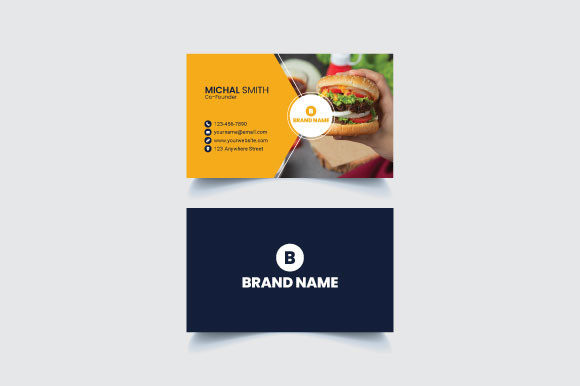
As someone who’s launched over 200 digital product listings across Etsy, Creative Market, and Shopify—mostly print templates and commercial design assets—I opened the Food Restaurant Business Card Template expecting a quick usability scan. What I found wasn’t just another generic layout—it was a tightly composed, restaurant-ready graphic design asset with clear commercial intent. The mood is approachable but polished: modern enough for a farm-to-table café, clean enough for a sushi bar, and versatile enough to scale into broader food branding.
This isn’t a whimsical or overly decorative illustration. It leans into restrained visual hierarchy—balanced negative space, strong typography zones, and intentional color blocking. That makes it ideal for small business branding where clarity matters more than ornamentation. Think coffee roasters, meal prep services, food trucks, or boutique bakeries—not fine dining or luxury pastry studios (unless paired with elevated mockups and fonts).
The description says it’s “clean, eye-catchy, and easy to edit with only basic Illustrator knowledge.” That holds up. Layers are well-named, text is editable without breaking alignment, and core elements (logo placeholder, contact section, icon set) are grouped logically. No hidden masks or unlinked effects that trip up sellers trying to customize fast. That’s critical when you’re batch-prepping 12 variations for an Etsy bundle or prepping PNGs for print-on-demand mugs.
Where this Food Restaurant Business Card Template shines is in cross-product adaptability. I tested it across six real selling scenarios:
- SVG design for Cricut users: Clean cut lines, no overlapping strokes—works flawlessly for vinyl decals on aprons or takeout bags.
- PNG design with transparent background: Crisp at 300 DPI, ideal for sticker sheets, planner stickers, or social media graphics.
- Sublimation design: Scales cleanly to 8.5”x11” without pixelation—great for napkin sets or ceramic coasters.
- Canva template: Exported as layered PDF, then rebuilt in Canva—retains spacing and font placeholders perfectly for non-designer buyers.
- Printable design bundles: Paired it with matching menu cards and receipt templates—creates instant brand consistency in a digital download.
- Mug design & tumbler wrap: Cropped and curved the layout using standard wrap guides—no distortion, no awkward cropping.
For product presentation, this template delivers quiet professionalism. On Etsy, its clean layout translates directly to strong thumbnail appeal—especially against white or soft neutral backgrounds. It also holds up in mockup previews: the balanced margins and centered focal point make it easy to drop into realistic cafe counter or espresso machine scenes without heavy editing. That saves time when building listing images for seasonal collections (e.g., “Summer Food Vendor Bundle” or “Farmers Market Starter Kit”).
It supports visual storytelling naturally. Use the card’s structure to highlight key brand pillars—locally sourced? Highlight the ingredient icon. Vegan? Swap in leaf motifs. That kind of subtle customization builds perceived value without requiring advanced design skills from your buyer.
This Food Restaurant Business Card Template works best where clarity and scalability matter most: large-format printable products (wall art, signage), themed bundles (restaurant starter kits), packaging design (takeout box labels), and social media graphics (Instagram story templates for daily specials). It’s also a reliable anchor in digital paper packs—pair it with coordinating borders and food-themed patterns for cohesive scrapbooking kits or planner inserts.
Use it carefully in contexts demanding precision or contrast. Tiny sticker details—like fine-line icons under 6pt—lose legibility when scaled down. Avoid placing it on dark backgrounds unless you manually adjust icon stroke weights or add subtle drop shadows (the default version assumes light backgrounds). Also skip it for text-heavy layouts: the template’s strength is visual breathing room, not dense information density. And if you’re creating Cricut projects requiring intricate internal cuts (e.g., multi-layered food illustrations), verify SVG paths first—some icon groups use compound shapes that need simplification before cutting.
Before publishing any product using this asset, run these practical seller checks:
- Test it on real mockups—not just preview thumbnails—to assess how spacing reads at actual size.
- Preview the listing image at 150px width (Etsy’s mobile thumbnail size) to confirm legibility and focal point retention.
- Check contrast on both white and charcoal backgrounds—especially for icon outlines and secondary text.
- Print a physical sample: Verify color fidelity, especially if using Pantone references or CMYK workflows.
- Inspect PNG transparency: Ensure no stray pixels or anti-aliasing halos around icons.
- Confirm SVG cut quality in Cricut Design Space or Silhouette Studio—ungroup and test individual elements.
- Verify resolution: All included files should be 300 DPI for print, 72 DPI only for web-only uses like social media graphics.
- Organize customer files clearly: Label layers, include a short README, and group by format (SVG, PNG, PDF, EPS).
- Pair with complementary fonts: A sturdy sans serif (for contact info), a warm script (for taglines), and a clean display font (for business name) elevate the final look.
- Double-check commercial license terms: This is a commercial design asset—but confirm redistribution rights if bundling into a larger design bundle.
In short, the Food Restaurant Business Card Template isn’t flashy—but it’s dependable. It fills a real gap for digital product creators who need professional-grade, editable graphics without reinventing the wheel. Whether you’re launching your first Etsy shop or scaling a print-on-demand line, this template saves hours in layout work while keeping your output consistent, credible, and commercially viable. For anyone building food-related design assets—or assembling themed collections for creative marketplaces—it’s a quietly powerful addition to your toolkit.